















Spill Kits
Spill kits are portable response kits for leaks and spills of oil, fuel, coolant and chemicals from equipment and machinery on jobsites, in equipment yards and in shops. A metal drip tray only holds a leak until someone empties it, while the absorbents in a kit soak up oil and fuel as soon as they touch it, and the range's solidifying mats and pads lock hydrocarbons in place. HERMEQ supplies spill kits for general purpose, oil and fuel and chemical spills, with dedicated kits for diesel exhaust fluid (DEF), in formats from vehicle bags to wheeled containers and high capacity stations.


Bag, drum, wheeled and truck spill kits
The format of a kit follows the place it covers and the size of spill it has to deal with, and the fluid it absorbs is a separate choice made in the next section.
Portable bag kits and tray kits
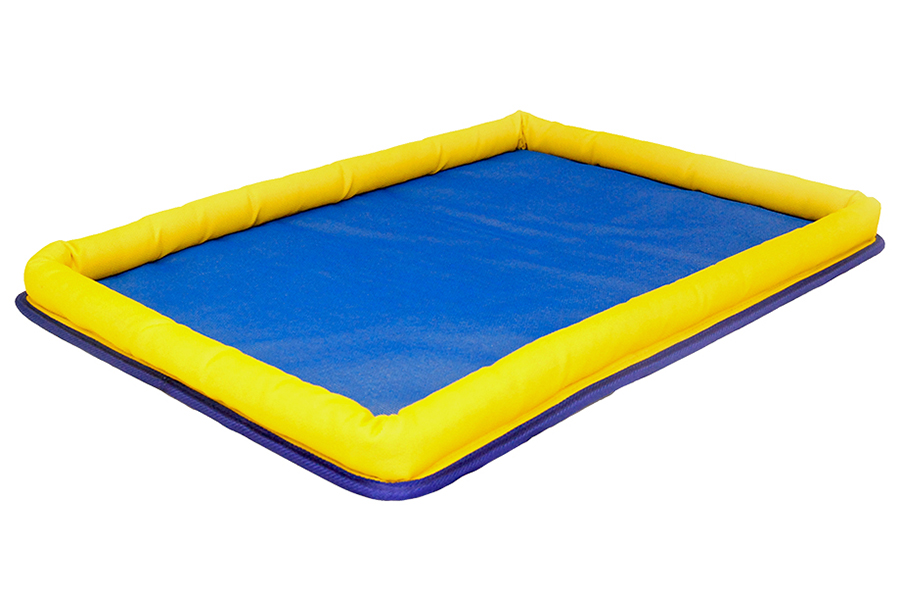
Bag kits are the smallest and most portable format, packed in a flap bag or shoulder bag that a crew carries to the spill or hangs on a wall or in a cab. They suit mobile crews, small equipment and the drips and splashes of daily refueling and maintenance. Tray versions add a rigid drip tray or a flexible tray that goes under a leaking machine, a drum being decanted or a hose coupling, so the kit catches fluid while the cleanup is under way.
Drum spill kits
Our drum spill kits are static stations, with the absorbents stored in a drum that stays at one fixed point such as a refueling area, a fuel store or a shop floor. A drum holds a larger stock of absorbents than most bag kits and suits a permanent risk point where the same fluids are handled every day.
Wheeled container spill kits
Wheeled container kits pack the absorbents into a wheeled bin that one person can roll to the spill across a yard, a warehouse floor or a paved laydown area. Sizes run from the 31 gallon wheeled spill kit up to 95 gallons, and the larger containers suit equipment yards where several machines refuel and are serviced in one place.
High capacity and high volume spill kits
High capacity spill kits are large spill stations for the places with the highest spill risk, such as chemical plants, warehouses, bulk fuel and chemical stores and large jobsites. High volume kits, in universal, oil and fuel and chemical versions, put a larger stock of absorbent in one kit for industrial areas where the same fluid is handled routinely.
Truck and forklift spill kits
Vehicle kits ride with the machine in a compact bag that stows behind a seat or on a forklift. The truck spill kits are oil and fuel kits for engine oil, hydraulic oil and diesel leaks from service trucks, fuel trucks and heavy equipment working away from the main yard. In warehouses and factories, forklift spill kits take paint, fluids and milder chemicals. For forklifts that move drums of acids and solvents, choose the chemical spill kit for forklifts.
Drip tray kits for small machinery and fuel tanks
SpillTector drip tray kits sit under small machinery, generators, pumps and fuel tanks and catch oil, fuel or DEF before it reaches the ground. The sorbent pad in the tray holds the contamination while clean rainwater drains away, so the tray does not fill and overflow in wet weather the way an open tray can.

Universal, oil-only or chemical spill kit
The three main types of spill kit are defined by the sorbent inside, and the fluid at the risk point decides which one goes there. Universal spill kits, sold as general purpose kits, absorb water as well as oil, so they take coolant, antifreeze, water-based fluids, weak chemicals and the mixed spills of a shop or maintenance bay. Oil and fuel spill kits, also called oil-only kits, repel water and absorb hydrocarbons, which lets them lift diesel, hydraulic oil and lube oil off a wet slab or a puddled yard without filling up with rainwater. Chemical spill kits, also called hazmat kits, are for acids, alkalis, solvents and other aggressive liquids, including battery acid in charging areas.
Diesel exhaust fluid needs its own kit. DEF is a water-based urea solution, so the oil-only kit usually kept at a fuel point will not pick it up. Our DEF spill kits are made for this fluid and belong wherever trucks and heavy equipment take on DEF, next to the oil and fuel kit that covers the diesel.
Where spill kits should be located on a jobsite
A kit belongs within a short walk of each point where fluid is stored, transferred or likely to leak, holding the sorbent for the fluid at that point.
Refueling points and fuel storage
At the refueling point, spills come from overfills, nozzle drips and leaking hose fittings. A drum kit or wheeled container with an oil and fuel sorbent stays at the fuel tank or fuel trailer, with a drip tray kit under the tank outlet.
Heavy equipment and generators
Excavators, loaders and other heavy equipment leak hydraulic oil from hoses and fittings at the work face, often far from the fuel point. Truck and forklift kits ride on the service truck or the machine, and parked generators, light towers and pumps sit on a drip tray or absorbent mat so a slow overnight leak is caught before it reaches the soil.
Storm drains and inlets
Storm drains carry whatever enters them to a creek or river, often without treatment, so every inlet within reach of a spill point needs a drain cover stored beside it. Covering the nearest drain is the first step of any spill response, before the socks go down and the cleanup starts.
Workshops and maintenance bays
Shop floors see a mix of fluids, from engine oil and coolant to brake fluid and parts washer solvent. A universal kit in a drum or wheeled container covers that mix indoors, placed by the door so it can be reached without crossing the spill.
Chemical and DEF storage
Stores of acids, solvents, batteries and DEF take a chemical kit or DEF kit matched to what is on the shelves, kept outside the entrance so it can be reached if the store itself is where the spill is. Where the store holds large quantities, a high capacity station sits here, and drums and IBCs stand on secondary containment from our drum and IBC containment range.


Gallon capacity and the number of spill kits per site
Two questions set the size of a site's kits: how much liquid each one must absorb, and how many are needed to cover every risk point.
Absorbent capacity
Match a kit's capacity to the largest single container, tank or machine reservoir at that point, since that is the worst spill the kit can face, and step up a size where several containers sit together. Across the range, capacities run from 5 gallon forklift kits up to 95 gallon wheeled containers, with high capacity stations above that for bulk stores.
Number and spacing of kits
The number of kits follows the number of risk points and the walking distance between them, so a large site with one fuel point can need fewer kits than a compact yard with several. Each refueling point, fuel or chemical store, shop and DEF dispenser gets its own kit.
Spill kit refills and spill containment accessories
The accessories divide into refills that restore a kit after use and equipment that keeps fluid away from drains and soil before a kit is needed.
Refill packs
Spill kit refill packs replace the pads and socks used from a kit, so a bag, drum or wheeled container goes back to full capacity without buying the container again. They are made for general purpose, oil and fuel, chemical and DEF kits, matched to each kit format.
Drain covers
Heavyweight drain covers are thick mats laid over a storm inlet during fuel transfer, offloading or chemical handling, with a version in a mountable storage bag that keeps the cover beside the drain it protects.
Absorbent mats
Absorbent equipment mats go under parked machinery to catch oil and fuel leaks while letting rainwater escape. Solidifying spill mats have polymer layers that turn oil and fuel solid as it lands, so a leak cannot run off the mat.
Containment berms and berm strips
Spill containment berms are portable PVC basins, resistant to chemicals and UV, for holding oil, fuel, chemicals and contaminated water. To build a low curb on a hard floor, berm strips of crush-resistant foam keep their shape when driven over and close off areas around trucks, tanks, drums and loading docks.
Land booms and detection strips
The spill land boom is filled with water and laid across open ground to hold a spill back. Hydrocarbon detection strips turn dark blue when oil or fuel is present in water, a quick check before water collected in a berm or excavation is pumped off site.

Popular Categories

Self-Dumping Hoppers
View Products >

Trash Cans With Wheels
View Products >

Concrete Washouts
View Products >
Frequently Asked Questions
The kits in this range hold absorbent socks, which are laid around a spill to stop it spreading and keep it away from drains, and absorbent pads, which are placed on the liquid to soak it up. A disposal bag, with zip ties in many kits, takes the used absorbents for sealing and removal.
A spill kit is ready for use as long as it is sealed, complete and dry, so its condition matters more than its age. It needs restocking once its seal has been broken, any contents have been used or have become wet or soiled, or its bag or container has been damaged by weather or sunlight.
Inspect a kit after every use and restock it before work at that point resumes. Between spills, check each kit on a fixed schedule, such as the routine site safety inspection, for a broken seal, missing items, water damage and a clear, signed route to it. When the work changes, for example when DEF or a new chemical arrives on site, check that the sorbent still matches the fluids at that point.
Used absorbents take on the hazards of the liquid they hold, so pads soaked in oil or fuel are disposed of as oily waste and pads that absorbed a chemical are handled as that chemical's waste. Seal them in the disposal bag, label the bag with the fluid, keep different fluids in separate bags and hand them to a licensed waste hauler under state and local rules.
A spill kit is response equipment, opened after fluid is on the ground to contain and absorb it. Spill containment is prevention that stays in place, such as drip trays, absorbent equipment mats, containment berms and drain covers, which hold fluid where it leaks or stop it reaching soil and storm drains before anyone responds. A sound site plan uses both, with containment at every fixed risk point and a kit within reach of each.
On concrete and asphalt, including driveways and parking lots, socks hold the edge of the spill and pads lift the liquid off the surface, and speed matters on asphalt because fuel and oil soften its binder. On gravel and bare ground the liquid soaks in, so the socks contain the surface spread and the pads take what is pooled. The stained gravel or soil is then dug out and bagged as contaminated waste.