














Loading Ramps & Access Ramps
HERMEQ supplies loading ramps and access ramps that carry people, wheeled loads, forklifts and trucks over a change in level. Built in aluminum, steel or HDPE plastic with anti-slip surfaces, the range gives a site a safe route over a curb, step, vehicle floor or container edge. It covers curb and wheelchair ramps, threshold ramps, van and truck ramps, container and forklift ramps, construction equipment ramps and gangways.
The ramps are used at events, by moving services and in healthcare transport, as well as on construction sites and in logistics yards.


Curb ramps, truck and trailer ramps and dock ramps
The range divides by what has to cross the ramp and where, from pedestrian crossings at a curb to forklift access into a trailer.
Curb ramps and wheelchair curb ramps
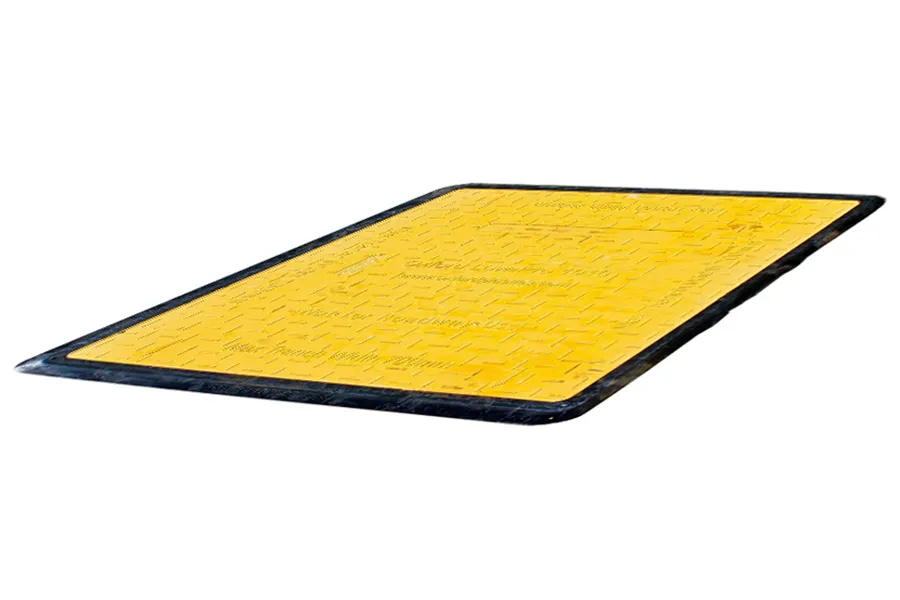
Curb ramps fill the step between a roadway and a sidewalk so that wheels roll over it without being lifted. The plastic curb ramp is a compact ramp for hand trucks, carts and wheelchairs at a single crossing point, and its chevron tread grips in wet or muddy conditions. For a wider pedestrian route, the wheelchair curb ramp gives wheelchairs, strollers and walkers room to cross, and a drainage channel built into it carries rainwater away from the deck. The portable wheelchair ramp does the same job on busy road work and public sites and is built to resist cracking and deforming under repeated traffic.
Threshold and step ramps
A doorway threshold, a single step or a raised slab edge on a walkway needs a short ramp that sits tight against the edge. The adjustable threshold ramp is a steel ramp that adjusts in height to match the step it serves, and its high-visibility powder coat is easy to see in busy work areas. The aluminum step ramp is a light, grooved ramp for wheeling tools and small equipment over a single step or curb on construction, landscaping and utility sites.
Van and truck loading ramps
Vehicle loading ramps take wheeled loads from the ground up to a van or truck floor. The folding van ramp is for vans on moving, delivery and medical transport work, where crates and equipment go in and out at every stop. The truck loading ramp is a longer single-stage aluminum ramp for box trucks and trailers, used to push crates, equipment cases and wheeled kit up to a higher deck.
Container ramps
Container ramps bridge the floor edge of a shipping container on sites that have no fixed loading dock. The aluminum container ramp is for hand-pushed loads, with a tapered entry at ground level and integrated handles for carrying it from one container to the next. The steel shipping container ramp is a checker plate ramp for forklift entry into standard shipping containers in yards, depots and construction site deliveries.
Mobile forklift yard ramps
The mobile forklift yard ramp is a full-length steel ramp with hydraulic height adjustment that lets a forklift drive from the ground straight onto a trailer bed or into a raised container. It gives a yard, warehouse or construction site without a loading dock the same forklift access that a fixed bay would, and it is repositioned to wherever the next trailer is parked.
Construction equipment ramps
Equipment ramps take machinery and site traffic over level changes that a loading ramp is not built for. The modular equipment ramp is a sectional ramp that butts against a step, ledge or curb and carries small machinery, pallet jacks and aerial work platforms on active construction and industrial sites, in place of timber ramps fabricated on site. The temporary vehicle ramp for pipe crossings lets heavy trucks and construction traffic drive over exposed pipes and cables, and it replaces the cold patch asphalt ramp that crews would otherwise lay and later remove.
Gangway ramps
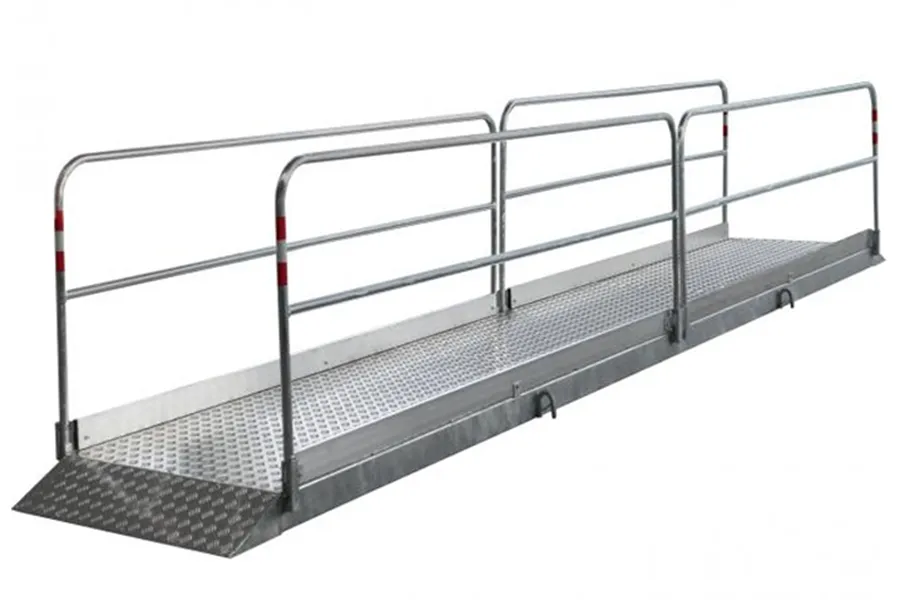
Aluminum gangway ramps give foot access between dry land and a dock, where the walkway is often wet and the metal is exposed to corrosion.


Heavy duty loading ramps by weight capacity
The load that crosses the ramp decides which ramp to buy, and the range runs from 660 lb step ramps to yard ramps rated for 26,000 lb two-axle forklift loads. Foot traffic and wheelchairs go on the plastic curb ramps and the steel threshold ramp, which are made for people, strollers, mobility aids and carts. Hand trucks, wheeled kit and pallet jacks go on the aluminum step, van, truck and container ramps, which stay light enough to handle while carrying the operator and the load together.
Forklifts need a ramp rated for a forklift: the steel shipping container ramp for driving into a container at ground level, or the mobile yard ramp for trailer and container beds. A forklift never goes on the aluminum container ramp, which is rated for pallet jacks. Heavy trucks and construction machinery go on the construction equipment ramps.
Access ramps for jobsites, events and warehouse yards
Construction and utility work
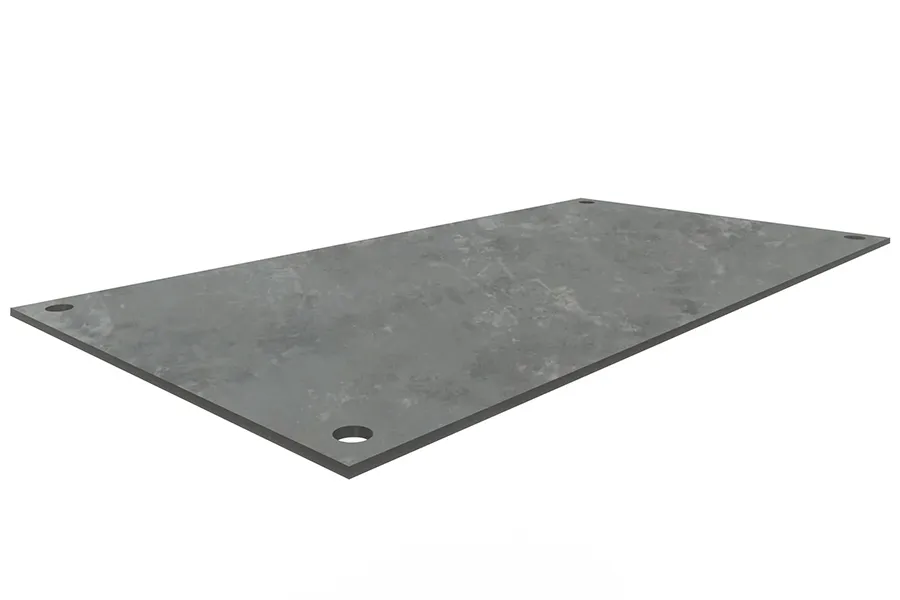
Utility and telecom trenching often leaves pipework or cable running across a haul road or driveway, and the temporary vehicle ramp is laid over it on flat, rigid ground and fixed through its anchor points. An open trench is a different job: steel road plates or trench covers carry the traffic over the gap, and temporary bridges span the longer openings. Resurfacing leaves ledges at curbs and slab edges, which the modular ramp bridges once it is butted up and, where the site safety assessment calls for it, bolted down. On soft or unpaved ground, ground mats under the approach give a ramp a firm base.
When a sidewalk closure sends pedestrians around the work, wheelchair curb ramps at each end of the detour keep it passable, and a RAMP warning sign on its legged frame tells drivers that the road surface changes level ahead.
Events and public venues
Ramps at event entrances, viewing areas and backstage routes are placed and moved by one person without bolts or anchors, and they have to keep their grip when rain wets the surface. At the load-in, the truck loading ramp brings cases and staging down from the trucks.
Logistics yards and warehouses
Loading and unloading containers at ground level, in yards without a loading dock, is daily work, and the ramp is moved each time a container is swapped or a trailer parks. Grip matters on wet mornings and on decks carrying dirt from forklift tires, which is why the container ramps use grooved aluminum and checker plate.


Ramp length, width and aluminum, steel or plastic
Measure the rise first
The height from the ground to the top of the curb, step or vehicle floor narrows the range before anything else. Measure it where the ramp will stand, and with a vehicle loaded the way it will be on the day, because suspension settles as the load goes on. Curb ramps suit curbs of 3 to 5 in, threshold, step and modular ramps cover steps and ledges up to about 12 in, and the aluminum container ramp reaches container floors up to 10 in for hand-pushed loads. The folding van ramp reaches floors up to 28 in, while trailer or container beds from 33 in to 75 in call for the mobile yard ramp.
Aluminum, steel or plastic
Aluminum carries a high load for the weight a person has to lift, which is why the step, van, truck and container ramps and the gangways are made from it, with grooved decks for grip. Steel carries forklifts and heavy wheel loads on the checker plate container ramp and the mesh-decked yard ramp, and it gives the threshold ramp a powder-coated plate that stands up to outdoor use. HDPE plastic is used for the portable curb ramps because it grips the pavement without anchors, does not damage the surface and is light to carry. The modular equipment ramp is plastic as well, and recyclable.
Usable width
Usable width is the clear deck between the side edges, and on several ramps it is narrower than the overall width given in the listing. Measure the widest wheel track, pallet jack or load that will cross, compare it with the usable width on the product page, and leave room to steer.
Storage and transport
The portable wheelchair ramp stacks, so a set of them travels on a truck bed and comes off one at a time at each crossing. The plastic curb ramp and the aluminum step ramp are light enough to keep in a site van or a mobile toolkit. The folding van ramp folds upright inside the van when stowed and takes up little floor space.
Popular Categories

Ground Mats
View Products >
Steel Road Plates & Trench Covers
View Products >

Timber Mats
View Products >
Frequently Asked Questions
They are safe when used within their rating and on the curbs they are made for. The wheelchair curb ramps in the range are rated for 770 lb and have anti-slip surfaces, the portable wheelchair ramp has an anti-trip surface, and the tapered sides on the wheelchair curb ramp guide wheels on and off. Use each ramp within the curb height range given on its product page and set it tight to the curb face so that no gap or lip forms at the top.
A loading ramp should be long enough to give a slope that the load can be pushed or driven up under control. Over the same rise, a longer ramp gives a gentler slope, which matters most for heavy hand-pushed loads and wheelchairs. Each loading ramp's product page gives the maximum recommended floor height for its length, and keeping the rise at or below that figure keeps the slope within what the ramp is built for.
Most loading ramps are held by their top edge on the floor they serve: the truck loading ramp rests on the deck without bolting, and the aluminum container ramp has a flat top that sits on the container floor edge. The full width of that top edge should bear on the floor before any load goes on. The steel shipping container ramp takes optional chains with D shackles, and the mobile yard ramp is held with its securing chains and wheel chocks.
The plastic curb ramp is made for wheelchairs, carts and light vehicles, so it takes light vehicle traffic over a curb. The wheelchair curb ramps are made for pedestrians, wheelchairs and mobility aids, and their load rating is set for that traffic.
The best truck loading ramp depends on whether the ramp travels with one vehicle or stays at the loading point. The folding van ramp is fixed to a single van and suits crews that load and unload at many stops. The truck loading ramp is not fixed to any vehicle, so one ramp kept at a depot or event load-in serves every truck whose floor it reaches.
Yes. The aluminum loading ramps come in standard sizes and can also be made to order where a vehicle, container or step needs a different length or width. Aluminum gangway ramps are quoted for each site after a survey, with installation and compliance checks included in that service.
Before loading, set the vehicle's parking brake, chock its wheels and clear mud, ice or debris from the ramp and the vehicle floor. Add the weight of the operator and the pallet jack or hand truck to the load when checking it against the ramp's rating. Travel straight up and down the ramp, never across the slope, and move one load at a time.