















Curb Ramps & Trench Covers
HERMEQ curb ramps and trench covers come in permanent, semi-permanent and portable forms for utility, roadwork, construction and event sites. Permanent products, such as ductile iron manhole covers, utility boxes and drain grates, are set into the finished surface. Semi-permanent covers bolt down or rest on the pavement or a concrete pad for longer works, and portable curb ramps and flexible-edge trench covers lay loose and move with the crew. Any ramp on an accessible route has to meet the minimum width and maximum slope set by accessibility codes, so a portable ramp is chosen for the curb height it is made for.


Trench covers, road plates and portable curb ramps
The range sorts by what has to cross the gap: people on foot, wheelchairs and carts, vehicles, or a fluid line carrying water or sewage.
Plastic trench covers and sidewalk boards
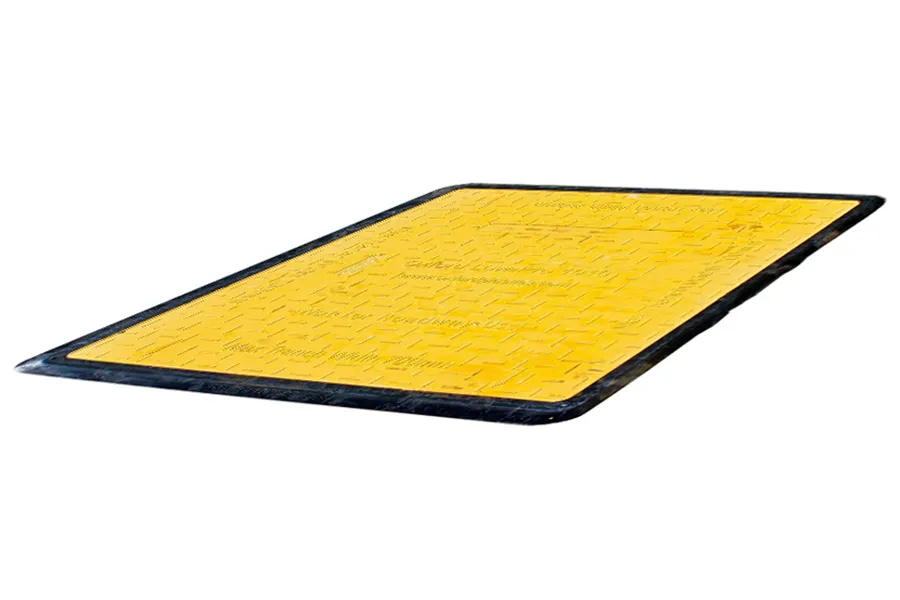
Composite and plastic trench covers bridge a narrow excavation in a sidewalk or walkway, so pedestrians keep a level route past utility work. The pedestrian trench cover holds the surface with a flexible edge and needs no bolts, which suits short jobs where the sidewalk cannot be drilled. The sidewalk trench board is molded from recyclable HDPE and PVC with anti-trip edges, and one person can lift it, so the crew can move covers along the trench as the work advances.
Driveway boards
A driveway board keeps a home or business reachable by car while a service trench crosses its entrance. The driveway board is rated for the whole vehicle and has fixing holes for works that run longer. The driveway trench cover is rated for one wheel of a vehicle, lays without bolts on most surfaces and has gas vents and a probe hole built in.
Steel and composite road plates
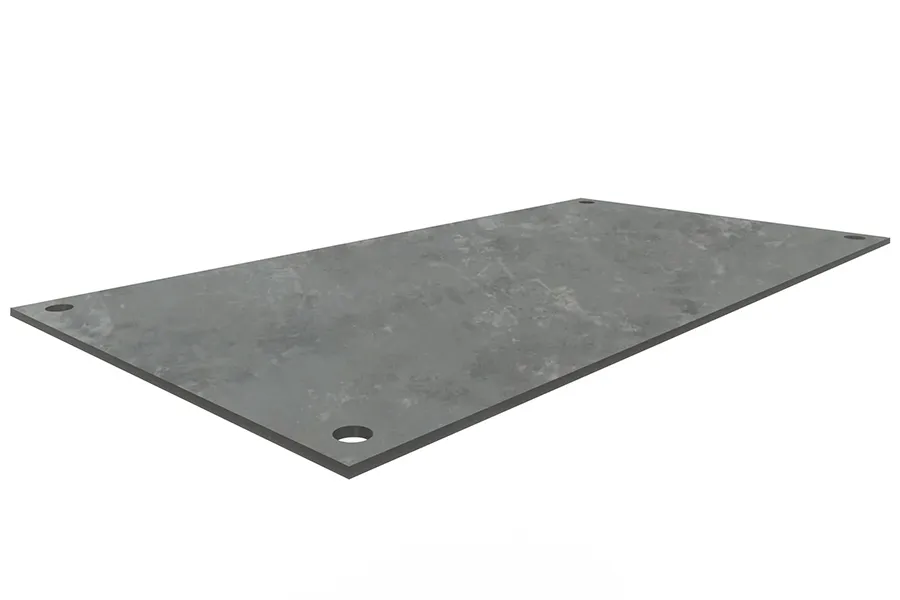
Road plates carry road traffic and heavy equipment across an open trench. Steel road plates are the usual choice on highways and in active work zones, where they are set by machine and left in place between shifts. The modular composite road plate is rated for loaded trucks yet goes down by hand in sections, which suits sites where a lifter cannot reach.
Portable curb ramps
Portable curb ramps give wheelchairs, carts and pedestrians a step-free way on and off a raised sidewalk when a work zone or event closes the permanent crossing. The wheelchair curb ramp has tapered sides that guide wheels on and off, a built-in drainage channel and no anchors to fit. The curb access ramp is a narrower plastic ramp with handles and a chevron tread, used on construction sites, at depots and in facilities where carts and light vehicles mount a curb.
Temporary manhole and hole covers
Temporary covers close a manhole or access chamber between work phases, while the permanent cover is off. The locking temporary manhole cover drops into the opening and locks with a key-turned blade, so site vehicles can drive over it without dislodging it. The high-visibility manhole guard is a yellow polypropylene cone that stands over an open square manhole as a physical and visual barrier, for openings that traffic does not need to cross.
Pipe road ramps
A low steel crossing carries a pump hose or pipe across a road that stays open, so traffic keeps moving and the line is not crushed. The pipe road ramp accepts Bauer, flange, Storz and Cardan connections for water, sewage, floodwater and industrial effluent, and it bolts down and has lifting eyes for placing. A road plate is made to bear on firm ground either side of a trench, and laying one over a hose leaves the plate resting on the line, which is why fluid lines across a live road go through a pipe ramp.
Pedestrian trench bridges
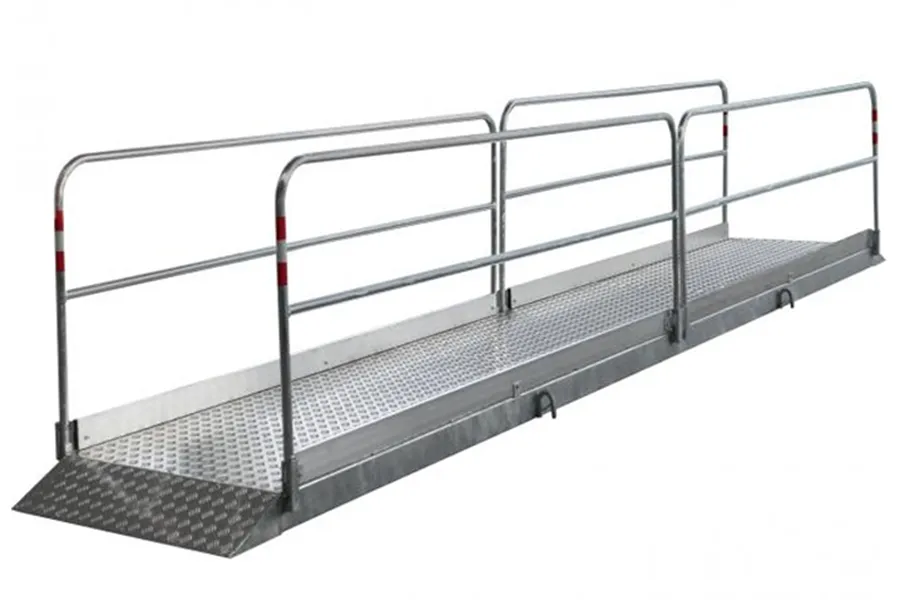
Where an excavation is too wide for a cover, a walkway bridge carries foot traffic over it. The trench bridge with handrails is aluminum, with folding rails, lifting hooks and an anti-slip deck, and comes in four lengths. Longer spans carry a lower distributed load, so the shortest length that clears the trench with bearing on both sides is the one to order. Other bridges and site stairways are in temporary bridges.
Shipping container ramps
A shipping container ramp lets a forklift drive from yard level into a container where there is no loading dock, at construction deliveries, depots and transport yards. It is steel with a checker plate surface, sized for standard containers, and optional chains with D shackles hold it to the container.
Permanent manhole covers, utility boxes and drain grates
The range also covers the castings that go in when the trench is backfilled and the surface is put back, so the temporary and permanent covers for one utility job come from the same place. The highway manhole cover is ductile iron for roads that carry heavy truck traffic. For residential streets, parking lots and other paved areas off the highway, the ductile iron manhole cover has indexed corners and a built-in lifting keyway. The light-duty manhole cover is round cast iron for driveways, sidewalks and parking courts. A utility surface box covers valves, utility vaults and telecom access in the roadway. Road drainage inlets take a storm drain grate with a captive, reversible hinge. In a paved plaza or walkway, the recessed paver access cover takes pavers in its galvanized tray, so the access point matches the surface around it.


Plastic trench cover or steel road plate
Composite and plastic covers are the right choice where the cover goes down by hand and the traffic is pedestrians, cars and light trucks, and steel is right where heavy equipment and live road traffic cross the trench for the length of the job.
Steel plates are set with a magnetic or mechanical lifter and carry the heaviest site and road loads, and the choice between them comes down to the surface. The anti-skid steel road plate has a resin and bauxite coating for tire grip. The anti-slip road plate has a coarse bonded aggregate top and comes in the most sizes and thicknesses. The plain steel road plate is uncoated mild steel, for covers where a coated surface is not specified.
Trench covers for sidewalks, interior work and events
Utility and telecom trenching across sidewalks
On a sidewalk, members of the public walk over the cover without warning, so trip edges and grip matter as much as load. Beveled or flexible edges, a textured surface and high-visibility yellow are what to look for, and the lightweight plastic trench cover also takes light vehicles where a sidewalk crossing meets an alley or a parking lot entrance.
Interior fit-out and slab openings
Inside a building, the openings are core holes and service voids in the slab, and the cover has to sit low and stay put so carts and workers on foot do not catch an edge. The small floor hole covers push into the hole on spring legs with no screws. The large floor hole covers screw to the slab or timber decking over larger penetrations.
Events and temporary pedestrian routes
At events, temporary routes cross curbs and service trenches, and every crossing has to be passable in a wheelchair. The portable wheelchair ramp is HDPE with integrated handles and stacks for transport and storage between events.


Trench cover sizes, load ratings and curb heights
Trench width and opening size
A trench cover is rated for a span, the clear width of the excavation, and the trench is measured at its widest point at the surface, where the edges may have broken back beyond the design width. The cover then needs firm bearing on sound pavement past both edges. For manholes and slab holes, measure the clear opening inside the frame, not the old cover, and compare it with the opening size listed for the cover you are considering.
Pedestrian, wheel and vehicle ratings
Ratings across the range run from foot traffic to vehicles of up to 48.5 tons, and they are stated in three ways. A pedestrian rating covers people on foot and a concentrated load such as a heel. A per-wheel rating covers one wheel of a vehicle, so a car needs a cover under each wheel track, while a whole-vehicle rating covers the full weight of a vehicle driving across. Some covers carry a vehicle rating over a shorter span and a pedestrian rating over a longer one, and the figure to read is the one that matches the traffic.
Fixing method
A bolt-down trench cover fixes to the pavement for longer works on busy sidewalks. Steel plates are held with road plate securing collars, and the modular composite plate has pre-drilled anchor points for semi-permanent installs.
Curb height
Portable curb ramps are made for a set curb height, 3 to 5 in across the range. Measure the curb face where the ramp will stand, since a ramp on a taller curb than it was made for leaves a step at the top and one on a lower curb does not sit level.
Popular Categories

Road Barricades
View Products >

Water Filled Barriers
View Products >

Traffic Cones
View Products >
Frequently Asked Questions
A trench cover is a plate or board laid over an open excavation so people or vehicles can cross while the work is in progress. Covers are made from composite, plastic or steel, and each is rated for the span it bridges and the load it carries. Steel versions are usually called road plates or trench plates.
A curb ramp is a short sloped surface that takes a route from street level up to a raised sidewalk without a step. Permanent curb ramps are cast in concrete as part of the sidewalk. Portable curb ramps are plastic units set against the curb for temporary access during street work or events.
Portable curb ramps are used on public sidewalks as temporary access when a work zone or event blocks the permanent crossing. Permanent curb ramps in the public right of way are built to accessibility guidelines for width and slope, and temporary pedestrian routes around street work are set out under the permit for the job.
The wheelchair curb ramps are rated for wheelchairs, carts and pedestrians, and a car should not be driven over them. The curb access ramp is the curb ramp in the range listed for light vehicles as well as carts. Where a car has to cross an open trench at a driveway, a driveway board is the product for the job.
Each steel road plate in the range has a lifting hole at every corner, so it can be lifted with chains and shackles from an excavator or loader rated for the weight. The plates can also be picked with a magnetic lifter, which holds the plate by its top surface and needs nobody to hook on at the trench edge.
Several products in the range are made to be laid in runs. The modular composite road plate is built from inner sections that lock together, with an end section at each end, so a run is extended by adding inner sections. Pipe road ramps can be set side by side to carry a hose across more than one lane, and steel plates are laid edge to edge along a trench and secured one by one.