















Container Ramps & Vehicle Access
HERMEQ container ramps and vehicle access equipment give forklifts and crews a safe way into shipping containers, trailers and trucks where there is no loading dock. The range covers steel threshold ramps for containers on the ground, hydraulic yard ramps that raise a forklift to trailer height, mobile unloading platforms, truck and side access steps, and forklift work platforms for inspection and maintenance at height. For crossings on the jobsite, an aluminum walkway bridge with anti-slip decking and folding handrails carries foot traffic over trenches and open excavations.


Container ramps, yard ramps and unloading platforms
Forklift traffic calls for a ramp, crews unloading on foot need a platform or steps at the vehicle, and inspection or overhead work needs a guarded platform raised on the forks.
Shipping container ramps
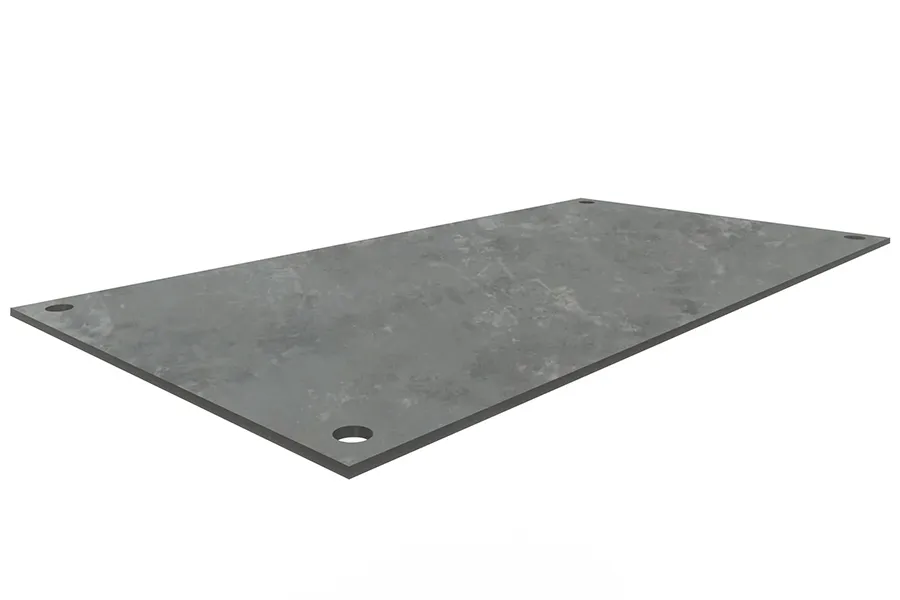
A shipping container ramp is the choice for containers standing on the ground in a yard, depot or jobsite compound, where a forklift has to cross the sill at the door to reach the container floor. It is not permanently fixed to the container, so one ramp can serve several containers on the same site as the work moves between them.
Mobile yard ramps for forklifts
A mobile yard ramp for forklifts takes a laden forklift from the yard up to the bed of a trailer or a container on a chassis, with hydraulics that set the lip to the floor height. Choose it for regular pallet traffic at a site with no loading dock, or where the dock is in the wrong place for the work, since the ramp is repositioned wherever the next vehicle parks.
Mobile unloading platforms for trailers
Mobile unloading platforms give a crew a level deck at the rear doors of a trailer, so cartons, crates and loose stock can be unloaded by hand at bed height without climbing in and out. Versions with rungs or integral steps, and a wider deck for several people working side by side, suit different crew sizes, and optional bridging ramps close the gap to the trailer floor where people cross it all day.
Truck access steps
Truck access steps are wheeled stairs with a platform at the top, for drivers and warehouse staff who step up into a truck or trailer to hand out parcels or check a load. They suit one or two people working at the back of a vehicle, and they come in step counts that match different bed heights.
Side access trailer steps
Side access trailer steps run along the side of a curtain-side or side-loading trailer, so crews reach goods across the full length of the bed instead of only at the rear doors. Platform lengths run up to 19.7 ft, which lets several people work along one trailer at the same time.
Forklift work platforms
A forklift work platform is a guarded cage carried on the forks, so a forklift can raise one or two people for inspection, maintenance or overhead work on trailers, racking and buildings. Entry is by a lift-up bar or a side gate, and the folding forklift work platform collapses for compact storage between jobs.
Aluminum walkway bridge for trench crossings
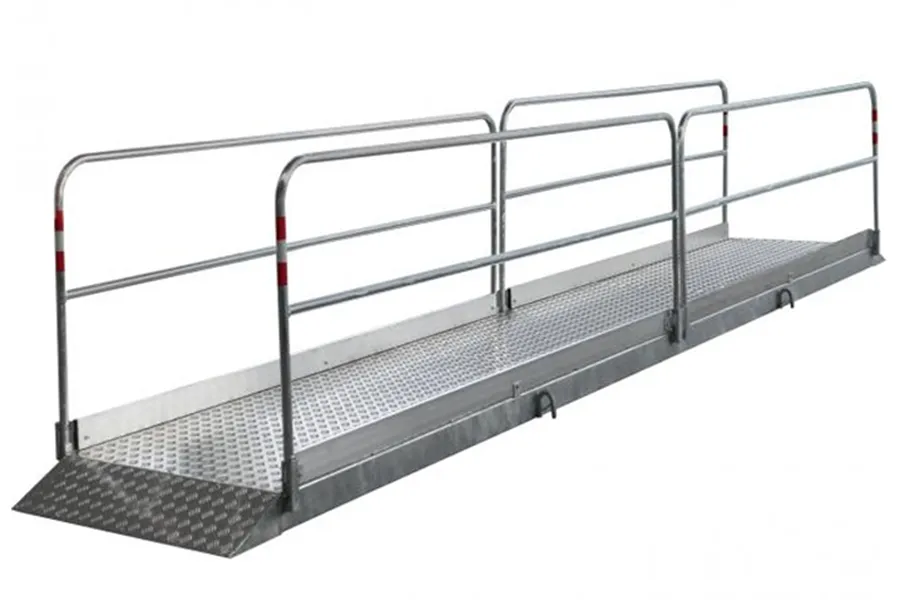
The aluminum walkway bridge carries foot traffic over trenches and open excavations, with anti-slip decking and handrails that fold down so the bridges stack for transport. It comes in four lengths for different trench widths, and lifting hooks let it be moved as the excavation advances. Site stairs and other pedestrian crossings are in the range of temporary bridges and stairs.


Shipping container ramp or forklift yard ramp
The height of the floor at the door decides it. A container resting on the ground has a low sill, and a steel threshold container ramp is all a forklift needs to drive in and out. A trailer bed or a container still on a chassis sits at dock height, and a forklift can only reach it on a hydraulic yard ramp, which adjusts from 33 in to 75 in across the models and carries up to 26,000 lb dynamic two-axle load.
A threshold ramp is built for the small step at ground level and cannot bridge a raised floor, while a yard ramp is a long, heavy unit sized for trailers and is more equipment than a ground-level storage container needs. Where containers arrive on a chassis and are then set down in the yard, the two often work on the same site: the yard ramp for unloading on arrival, and the threshold ramp for daily access once the container is on the ground.
Storage containers, dockless deliveries and forklift work
Jobsite and storage containers
Containers on a jobsite or in a storage yard hold tools, materials and equipment components, and a forklift goes in and out of them several times a day. The ramp stays at the door for weeks at a time, so the ground in front of the container needs to be firm and level, such as a compacted stone pad or concrete apron, to keep the ramp bearing evenly and to stop ruts forming where the forklift turns.
Deliveries at sites without a loading dock
Construction sites, transport yards and industrial depots without fixed bays receive trailers wherever there is room to park them. The access unit moves with each delivery, so it has to set up quickly on asphalt, concrete or compacted stone, and the crew needs a stable footing at bed height for as long as the doors are open.
Forklift inspection and overhead work
Facilities and maintenance teams use a forklift work platform to reach lights, signs, gutters and the roofs of trailers and containers without bringing a separate lift onto site.


Container ramp capacity, floor height and safe setup
Load and capacity
Ramps are rated for the forklift that crosses them, so compare the rating with the laden weight of the truck and its axle loads, not with the weight of the pallet alone, which is why the yard ramps are rated by dynamic two-axle load. Platforms and steps are rated for people and what they carry, from 550 lb on the forklift work platforms upward, so count the crew who will stand on the deck at once and add the heaviest load they will handle. Unloading decks in constant use can be upgraded with heavy-duty wheels that raise their rating.
Floor height to bridge
Measure from the ground to the floor at the door with the vehicle parked where it will be unloaded. A trailer sits lower when loaded and rises as it empties, so the platform or step height should suit the bed height through the whole unload, and a yard ramp's hydraulic range should cover the lowest and highest vehicles that use it.
Ground conditions and moving the unit
Yard ramps, unloading decks and steps all travel to the vehicle, so consider how each one gets there. Truck access steps and side access units roll on swivel casters, with rubber wheels available for rougher yards, and unloading decks can be fitted with forklift pockets so a forklift carries them between bays.
Securing the unit and protecting the crew
Anything a forklift drives over has to be held in position, and the yard ramps come with wheel chocks and securing chains for that purpose. Truck and side access steps have casters with brakes to hold them still while people climb, and the side units can take swing-out stabilizers.
Popular Categories

Dumping Hoppers
View Products >

Forklift Attachments
View Products >

Lifting Attachments
View Products >
Frequently Asked Questions
A container ramp is a short steel ramp placed at the doors of a shipping container so a forklift can drive from the ground onto the container floor. It bridges the step between the yard surface and the raised door sill, so the wheels roll across it instead of striking the sill.
The shipping container ramp fits standard 10 ft, 20 ft and 40 ft containers. The same ramp serves all three sizes, so one unit can move between containers of different lengths on the same yard or jobsite compound.
The shipping container ramp is fastened to the container with chains and D shackles, which are available as an option with the ramp. Chaining the ramp to the container stops it creeping away from the door as a forklift drives on and off.
When goods come off by hand, a mobile unloading platform at the rear doors or a set of truck access steps gives the crew a footing at bed height without any ramp. Where a forklift has to drive into a trailer and there is no loading dock, a mobile yard ramp takes the place of the dock.
Yes. Mobile unloading platforms are available with wind-down legs that level the deck on uneven yard surfaces and hold it steady once it is in position. Fixed height versions suit flat, paved yards where no leveling is needed.