















Temporary Fence Panels
HERMEQ temporary fence panels are anti-climb welded mesh panels in the standard 6 ft x 12 ft format, used for construction site security, crowd control and event perimeters. Each panel stands freestanding in a base and clamps to the next, so a line goes up without digging or concrete and moves as the site changes. The range carries the fence clamps and rubber fence feet needed for setup, along with pedestrian and vehicle gates for site access. The panels also sit in water-filled slot block bases, which mark out vehicle lanes and jobsite boundaries. Rigid mesh, security-rated and monitored fencing extend the range to higher-risk sites.
-

-

-

-
 Anti-Climb Temporary Fence Panel 6ft x 12ft - Vertical & Horizontal Bars$112.00
Quick 5 Day Delivery
-

-

-

-

-

-

-

-

-

-

-

-

-

-

-

-

-

-

-

-

Anti-climb, security and monitored temporary fence panels
The range climbs in security from standard anti-climb panels for routine perimeters to monitored systems for unattended high-risk sites, so the choice follows what the fence has to keep out and how long it stays up.
Standard anti-climb panels
These are the portable fence panels behind most construction, utility and event perimeters: welded mesh in a galvanized tube frame, standing in feet and clamped end to end. The 6 ft x 12 ft temporary fence panels are the original HERMEQ panel and cover general site perimeters. Crews that set up and strike fence often handle the lightweight temporary fence panel faster, while the mid-weight anti-climb temporary fence panel suits lines that stay up longer and take repeated handling. The reinforced anti-climb panel with vertical and horizontal bars is the stiffest of the standard panels, for lines that take knocks from equipment and deliveries.
Rigid mesh security fencing
Where a fence has to stand for months or face open wind, rigid mesh security fencing brings the stiffness of permanent welded mesh fencing to a freestanding system on heavy bases, with hex pin fixings that resist removal. The double wire mesh fencing has a double wire panel face and is used around schools, sports grounds and airports as well as building sites.
Security-rated fencing
For utilities, critical infrastructure and other high-risk areas, security-rated temporary fencing pairs anti-climb mesh with a cantilever base and hidden fixings, and is tested for the time it delays an intruder. It goes up without foundations. The V-mesh on-ground defense system bolts V-ribbed mesh panels to concrete block bases, for paved or sensitive ground where nothing can be driven into the surface.
Monitored mesh fencing
Monitored mesh fencing with tamper alerts is built for sites left unattended at night or between shifts, where a breach has to be known about as it happens. Its pre-assembled panels detect impact, movement and cutting, with an optional alarm relay, and the system installs without ground fixings across mixed terrain.
Pedestrian and vehicle gates
Openings in a mesh line take gates from the same range, and the full set of construction site gates sits in its own category. A mesh vehicle gate wheels open for trucks and heavy equipment, and the vehicle gate conversion kit turns two standard panels into a double swing gate.


Securing fence panels with feet, ballast or anchors
Feet alone hold a mesh line on level, sheltered ground, and stabilizers, fixed anchors or water-filled bases take over as runs lengthen, the wind rises or the public passes close by.
Standard panels drop into rubber fence feet, and the 6 ft x 12 ft anti-climb panels can also sit on tube stands with leg weights.
Add fence stabilizers and block trays loaded with ballast once a run exceeds 160 ft without a break, sits beside a public walkway, stands on exposed or raised ground, or faces high wind, rain or snow. On grass or soil, ground pins fix the stabilizer in place.
On soil, concrete or asphalt where blocks would clutter a walkway, a mesh fence locking system anchors each panel foot with a ground screw, concrete screws or resin anchors. Its low profile leaves little to trip over, and a stabilized version adds a brace for wind.
Where the fence line also has to separate a vehicle lane, the water-filled slot block fence base holds a panel inside a traffic barrier. A water-filled ballast block adds heavy ballast at exposed corners and traffic edges, and both drain down for transport.
Construction fence for jobsites, events and roadwork
Construction site perimeters
On a building or sitework job the fence line moves with each phase, so panels that unclamp and lift out of their feet let the perimeter shrink, grow or reroute without new posts.
Events and public spaces
At festivals, concerts and public works, everyone who passes sees the fence, so a straight, consistent line and low feet matter alongside security. High-visibility anti-trip fence feet keep the base easy to see for pedestrians. Mesh fencing marks perimeters and closed areas, and queue lines and spectator fronts are the job of crowd control barriers.
Utility work and roadwork
Fence around an open excavation or a lane closure usually stands on asphalt, concrete or a sidewalk that cannot be drilled or damaged, so no-dig bases and bolted on-ground systems do the work.


Temporary fence panel sizes, gates and fittings
Height
The range runs from about 4 ft to 10 ft tall. Low panels mark out walkways, staging zones and closed areas, the standard 6 ft height suits general perimeters, and the taller rigid and monitored systems are for sites where climbing is the main risk.
Corners, gates and access
Corners, gate posts and changes of direction carry more load than a straight joint, so these are the points where stabilizers, extra clamps and anti-lift fixings go first, and the vehicle gate width follows the largest truck or machine that has to pass through.
Matching feet, clamps and gates to the panel
Accessories in the range are sized to particular panel formats, so check each one against the panel width and frame tube before ordering. Tube stands, leg weights and heavy-duty clamps fit the 6 ft x 12 ft anti-climb panels, the gate conversion kit lists the frame size and panel heights it fits, and printed covers, slot block bases and fence panel storage racks are sized to the standard HERMEQ mesh panel.
Temporary fencing clamps, brackets, lights and screens
Beyond bases, a small set of parts changes how well a mesh line resists tampering and how visible it is, and the full set sits in the temporary fencing accessories category.
Clamps and anti-tamper fixings
Standard fence clamps join neighboring panels at the frame and come off quickly when the line moves. On public-facing or high-risk sites, anti-tamper fence clamps use a nut that only turns with a dedicated wrench, so panels cannot be unbolted with ordinary tools.
Anti-lift brackets and struts
Anti-lift brackets lock panel and foot together under the clamp, and step block struts run from beneath the foot up to the coupler, so the panel only comes out once several parts are removed. In high-risk zones, brackets go on at least every third panel and at every access point.
Lights and reflective strips
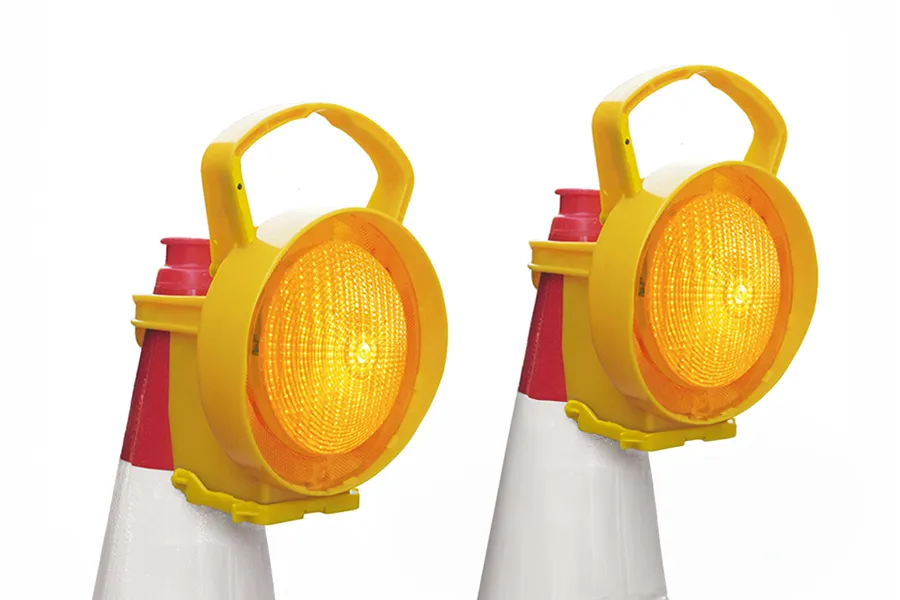
Fence lights flash amber, switch on at dusk with a daylight sensor and mount directly to the mesh, and high-visibility reflective strips add bands of reflection along the panels.
Screens and printed covers
Printed mesh fence covers carry contractor branding, project information or safety messages across the panel face and screen the work from view, in breathable mesh or heavier PVC mesh. Sites that need a solid face use solid steel construction fence panels, and work that has to cut noise uses acoustic barriers, both part of the wider temporary fencing range.

Popular Categories

Construction Site Gates
View Products >

Acoustic Barriers
View Products >

Steel Construction Fence Panels
View Products >
Frequently Asked Questions
Temporary chain link panels use woven diamond fabric in a tube frame, while anti-climb panels use welded steel mesh with a tight grid. The small openings leave few footholds or finger holds, so the fence is harder to scale and less likely to snag clothing or tools. Both types stand freestanding in bases and clamp together in the same way.
Measure the full perimeter, take off the width of each planned gate, divide the remainder by the width of one panel and round up. Order one foot for every panel plus one extra for each separate run, and a clamp for each joint.
Feet are set out along the line first, then two people lower each panel into them and clamp it to its neighbor before the next one goes in. Stabilizers or anchors follow at corners, gates and exposed sections.
Yes. A section can be opened, shifted or taken down with a wrench and two people. The galvanized finish resists corrosion, so the same panels go back up on the next phase or the next job.
Panels travel and store in steel racks with forklift guides, which load straight onto a truck and stack on one another in the yard. Rubber fence feet have their own racks sized to hold a full load.