















Concrete Buckets
HERMEQ supplies concrete buckets for placing ready-mix by crane, forklift or excavator, including the hose-outlet concrete bucket, twinflow buckets with bottom and side discharge, and coneflow buckets with a geared side outlet. The range also covers a forklift bucket for sites without crane access and an excavator bucket for footings and trench work. It is part of HERMEQ's sitework and shoring equipment. The buckets are used on slabs, wall and column formwork, footings and trench fills. Choose the type and capacity that best suits your project and the machine that will lift it.


Twinflow, coneflow, laydown and excavator buckets
The range divides by how the bucket is lifted: three crane buckets, which run from 132 to 528 gal, a forklift bucket carried on the forks, and an excavator bucket that mounts on the machine's arm.
Twinflow concrete buckets for bottom and side discharge
The twinflow concrete bucket releases concrete through its base for open slab pours and through a fold-out chute at the side when the concrete has to go into a trench, a column form or along a slab edge. It is the general-purpose crane bucket in the range, and the one to choose when the pour plan mixes slabs with footings and columns on the same job.
Coneflow concrete buckets with a geared side outlet
The geared coneflow concrete bucket has a rounded body that feeds a single side outlet, with a geared gate for close control of the flow. Choose it for high-volume crane pours where concrete goes to one point at a time, such as slab bays, column bases, trench backfill and formwork infills on a multi-pour project.
Hose-outlet laydown buckets for wall and column forms
The hose-outlet concrete bucket lies flat beside the truck to be filled, tips upright for the pour and releases concrete through a lever gate into a flexible hose. The hose lets the crew reach down inside wall and column forms and guide the concrete to where it lands, which a fixed chute cannot do. It is the bucket for form-critical pours, footings and narrow trenches.
Forklift concrete buckets for sites without crane access
The forklift concrete bucket is a low, square bucket with a side outlet and a lever gate, carried on the forks of a forklift or telehandler. It suits warehouse and mezzanine slabs, retrofits, interior work and urban lots where a crane cannot be set up, and an optional tremie hose fitting takes concrete down into deep or vertical forms.
Excavator concrete buckets for footings and trenches
The excavator concrete bucket turns the excavator that dug the footings into the machine that fills them. Choose it when an excavator of the right class is already on the jobsite and the work is foundations, trench fills or road slabs that would otherwise call for a pump.


Concrete bucket for crane, forklift or excavator
The machine already on the jobsite decides the shortlist, and the lift check comes before any choice of discharge or capacity. For a tower crane or mobile crane, add the empty weight of the bucket to the weight of the concrete it will carry, include the rigging, and compare the total with the crane's rated capacity at the radius where the pour takes place, which is often well below its capacity close in. The twinflow and coneflow buckets carry safe working loads up to 10,582 lb, and the bucket's own rating limits the load as firmly as the crane's load chart.
A forklift or telehandler picks up the forklift concrete bucket through the fork shoes on its base, and the loaded bucket must sit within the truck's rated capacity at its load center and, on a telehandler, at the boom extension the pour requires. The forklift bucket is never rigged to a crane hook. Where any part of the pour needs a crane pick, the twinflow, coneflow or hose-outlet bucket is the right choice.
The excavator bucket suits 13 to 20 ton excavators and goes on in place of the digging bucket, so a crew with a machine in that class can dig and pour without bringing in a second machine. Where the excavator or forklift has to cross soft ground to reach the pour, ground protection mats keep the route firm.
Concrete pouring buckets for slabs, walls and footings
Slabs and decks
Open slabs and decks take concrete fastest from a bottom discharge, released close to the surface and spread in bays the finishers can keep up with. The gate needs to open fully for bulk discharge and close cleanly between drops, so the bucket does not leak as it swings to the next bay. The twinflow bucket is the usual choice, and along curbs and slab edges set out with road forms, its side chute places concrete against the form without flooding it.
Walls, columns and formwork
Tall forms are where segregation begins: concrete that falls freely through reinforcing steel separates, and the coarse aggregate collects at the bottom of the form. Good practice is to place concrete low, in even lifts that are consolidated before the next one goes in, and to move the outlet along a wall instead of piling concrete in one spot. The hose-outlet bucket is built for this work, and the forklift bucket with its tremie fitting does the same job indoors.
Footings and trench fills
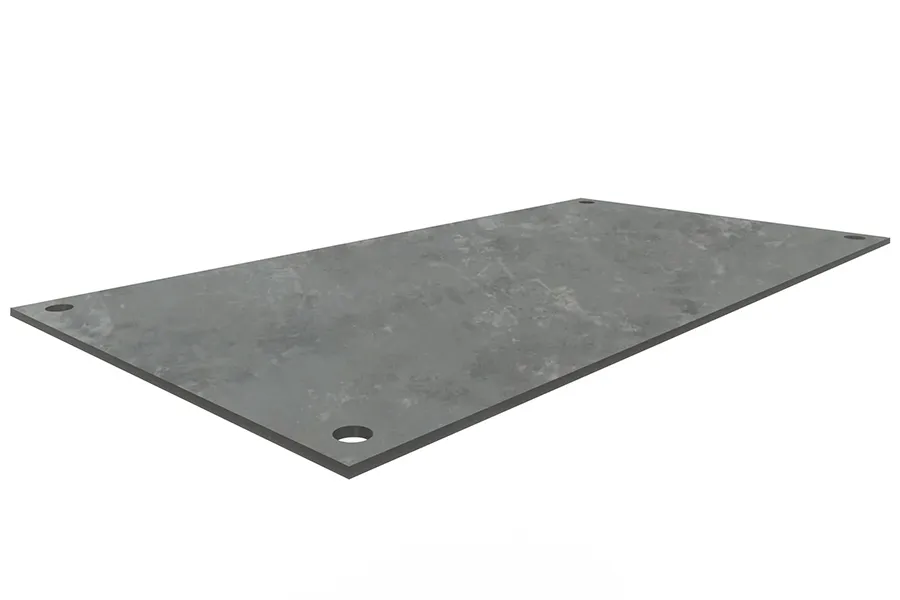
Footings and trench fills need a side or hose discharge that puts concrete straight into a narrow excavation without spilling onto the banks, where it fouls the trench walls and any shoring. A geared gate helps when the trench is long and the crew is filling to a level line. The coneflow bucket and the excavator bucket both suit this work, and where the ready-mix truck has to cross an open trench to reach the filling point, road plates carry it over.
Interior, mezzanine and tight-access pours
Inside a building, on a mezzanine or on a city lot with no room for a crane, access sets the limit: door heights, aisle widths and the floor loading under the machine. The loaded bucket travels across finished or suspended floors, so the route and the floor rating need checking along with the bucket itself. These are the pours the forklift bucket is made for.


Concrete bucket sizes, gates and filling height
With the machine and the pour settled, the remaining choice comes down to how much the bucket carries, how finely the gate controls the flow and how the bucket is filled from the truck.
Capacity
Size the bucket to the lifting machine first, using the loaded-weight check, and then to the pace of the crew: a bucket larger than the placing and finishing crew can handle in one drop sits part-emptied while the concrete stiffens, and one that is too small adds lifts to every truckload. On long crane cycles or with a large crew, a bigger bucket cuts the number of lifts, while on small, scattered pours a smaller bucket is easier to control.
Lever or geared gate
A lever gate opens and closes with a single handle, and it is simple, quick and has little to go wrong, which suits bulk drops and crews working fast cycles. A geared gate opens through gearing, so the operator can set the opening in small steps and hold it there, which gives finer control of the flow into a column, a narrow trench or a form that must not be overfilled. The twinflow bucket comes with either gate, and the coneflow bucket is geared.
Filling height and footprint
A laydown bucket lies on its side to be filled, low enough for the ready-mix chute to reach it easily, and the hose-outlet bucket works this way. An upright bucket stands on its base while it fills, so the truck chute has to clear the rim, and its height and base size decide whether it fits under the chute and where it can be set down between pours. For an upright bucket, compare the height on its product page with the truck's chute and the space at the filling point.
Popular Categories

Road Forms
View Products >

Road Plates
View Products >

Crane Mats
View Products >
Frequently Asked Questions
A concrete bucket is lifted full and carried to the pour, where it releases concrete through a gate, chute or hose. A hopper usually stays in one place and receives concrete to feed it on, for example into a pump, a conveyor or smaller containers. The trade uses the words loosely, and many crews call a crane bucket a concrete hopper or hopper bucket, so the product description is the surer guide.
The lifting method, the capacity and the gate account for most of the price. Larger capacities cost more, and the geared version of a bucket costs more than the lever version of the same size. Longer hoses on the hose-outlet bucket add to its cost. Each product page lists the price for every capacity and option.
Take the empty weight of the bucket from its product page and add the weight of the concrete it will carry, using the unit weight the ready-mix supplier gives for the mix. For a crane lift, add the rigging as well. The total must stay within the bucket's safe working load and within the lifting machine's capacity at the radius or reach of the pour, and where it does not, the bucket is filled part way.
A bucket is the better choice when a crane, forklift or excavator is already on the jobsite, when the pour is spread across several placing points or when the mix is too stiff to pump well. A pump suits large continuous pours and placing points the lifting machine cannot reach.
Wash the bucket out as soon as the last load is placed, while the concrete is still plastic, running a hose through the gate, the chute and any discharge hose. Work the gate open and closed while rinsing so no concrete sets in the mechanism. Scrape out buildup with a plastic or wooden tool instead of hammering the shell, because dents in the steel give later loads somewhere to stick.