













Trench Covers & Cable Protectors
HERMEQ trench covers and cable protectors keep pedestrians and vehicles moving safely over open cuts, surface-laid cables and hoses on jobsites, streets and event grounds. The trench covers span utility and telecom excavations in sidewalks, driveways and roads, in composite, plastic and steel, with ratings from foot traffic up to loaded trucks. Cable protector ramps and hose ramps carry power, data and fluid lines across walkways and drive lanes. The range also includes trench bridges for wider openings, a shipping container ramp for forklift loading, and curb and wheelchair ramps that keep sidewalk routes open while the work goes on.


Trench cover plates, cable protector ramps and curb ramps
The right product depends on what crosses the route, from foot traffic to loaded trucks, and on what lies beneath it: an open trench, a bundle of cables or a pumped line.
Composite trench covers for sidewalks and driveways
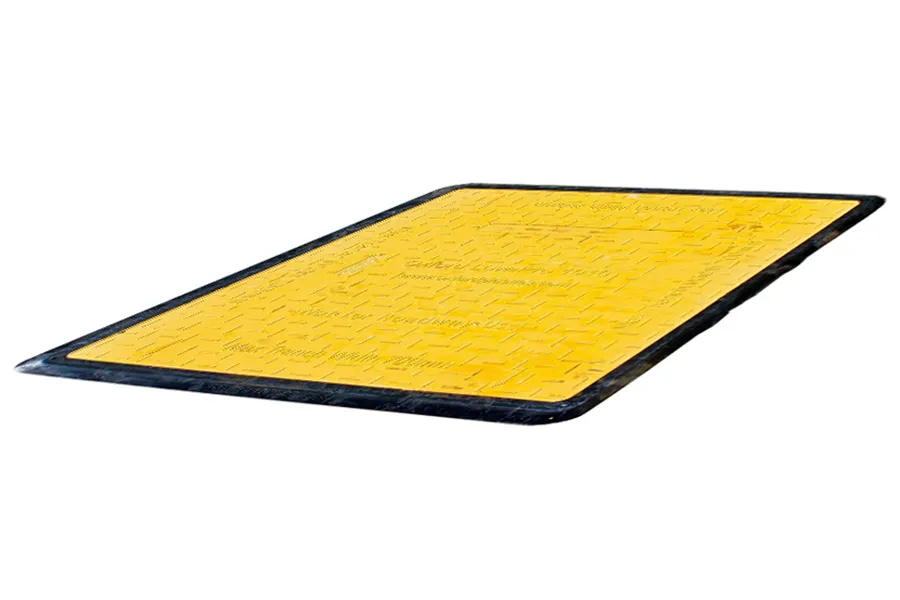
Glass-reinforced composite covers sit almost flush with the surface over narrow utility and telecom cuts, so the edge a pedestrian steps over stays low. A pedestrian trench cover is the choice where only people cross. Where carts, small equipment and light vehicles also pass, the lightweight drive-over trench cover takes both kinds of traffic. A driveway trench cover is sized for the cut a service connection leaves across a residential drive, so the household car can still reach the street.
Heavy-duty composite trench plates for roads
Composite trench plates carry truck traffic across road openings in modular sections that lock together, so one system covers a short cut or a long run down the street. Choose the composite trench plate for narrow road cuts over a typical utility trench, and the modular composite trench plates where the opening is wider or the run is long and irregular.
Plastic sidewalk and driveway boards
Polyethylene and PVC boards are fully recyclable and have beveled anti-trip edges, which suits public-facing street works and contracts that ask for recyclable materials. The plastic trench cover suits pedestrian routes over utility and duct cuts. The plastic sidewalk board is a one-person lift for sidewalk crossings, and the plastic driveway board takes vehicle traffic across driveways and roadside access points.
Cable protector ramps with lids
Multi-channel ramps separate power, data and small hose lines into their own channels, so one crossing carries several services side by side. Cable guard ramps take car and truck traffic on road crossings, logistics routes and event drive lanes. Heavy duty cable protectors are built for walkways and low-volume light vehicle traffic at events and on sites.
Hose and cable ramps for large lines
Single large-channel ramps carry hoses, hydraulic lines and thick cable bundles up to 4 in across under vehicle and forklift traffic. The closed-channel hose and cable ramp encloses the line against impact, dust and water. The open-channel hose ramp lies flat with no installation for layouts that change from week to week, and the cable and hose cover ramp is the bolt-down choice for the heaviest site traffic and heavy equipment.
Pipe road ramps for pumping across roads
When pumped water, floodwater or sewage has to cross a live road, the water and sewage pipe road ramp carries the flow through a low steel body that traffic drives over, rated to 154,300 lb. It replaces a road cut or a scaffold-supported pipe bridge for dewatering, bypass pumping and flood response, and units can be set side by side for multi-lane roads.
Curb ramps and wheelchair ramps
When work closes or diverts a sidewalk, portable ramps carry wheelchairs, strollers and carts between the curb and the temporary route. The wheelchair curb ramp fits curbs from 3 to 5 in high, and the portable wheelchair ramp stacks for transport between jobs. The curb access ramp is a lighter ramp with carrying handles for carts and light vehicles, and the adjustable threshold ramp bridges higher steps and doorway thresholds on pedestrian routes. Vehicle and loading ramps are in the access ramps range.


Composite trench covers or steel road plates
Composite covers are the faster choice for short utility and telecom cuts, and steel road plates remain the answer for wide excavations and the heaviest continuous traffic. Modular composite sections interlock by hand, need no bolting in most cases and are laid by two people without a crane, forklift or excavator, and the heaviest of them carries up to 48.5 tons.
Steel is the better fit when the opening is wider than a composite run is rated to span, when loaded trucks and heavy equipment will cross it for weeks, or when an excavator with a magnetic lifter is already on the job to set and pull the plates. HERMEQ steel road plates come plain or with a bonded anti-slip surface. Choose a coated plate wherever people walk on it or vehicles brake and turn on it.
Covering trenches and cables on streets, sites and events
Utility and telecom street works
Covers on public streets are judged on what the public sees and feels underfoot: a bright yellow surface, a slip-resistant top that holds grip in rain, and beveled edges that feet and wheels do not catch on. Where cables run exposed along a road edge during the works, tall sand-ballasted high-voltage cable covers stand over the line as a physical and visual barrier.
Construction sites and haul routes
On a jobsite the traffic is dump trucks, excavators, telehandlers and delivery trucks crossing dewatering hoses, temporary power and open service trenches. Ramp runs belong on a straight section of the haul route, set square to the direction of travel, because wheels that turn or brake on a ramp push it out of line.
Events and temporary power
Generator feeds and distribution cables at festivals, concerts and sports events cross walkways and drive lanes used by crowds, production vehicles and emergency access. A crossing on these routes is rated for the emergency vehicles that use the lane as well as the crowds on foot.
Warehouses and logistics yards
Indoors and in yards, forklifts and pallet jacks cross power and data cables laid along the floor to temporary workstations, chargers and equipment. For loading at ground level, the shipping container ramp gives forklifts a steel checker plate route into standard shipping containers where there is no loading dock.


Heavy duty ratings, trench span and cable channel size
Traffic and load rating
The range runs as one load ladder, so the route sets the product: pedestrian covers and sidewalk boards for foot traffic, driveway boards rated for one wheel of a car, and modular composite plates for trucks. Cable ramps run alongside it, rated from about 13,000 lb to over 66,000 lb. Rate the crossing for the heaviest vehicle that could use it during the job, including deliveries and emergency vehicles, and choose the higher rating when there is doubt.
Trench width and rated span
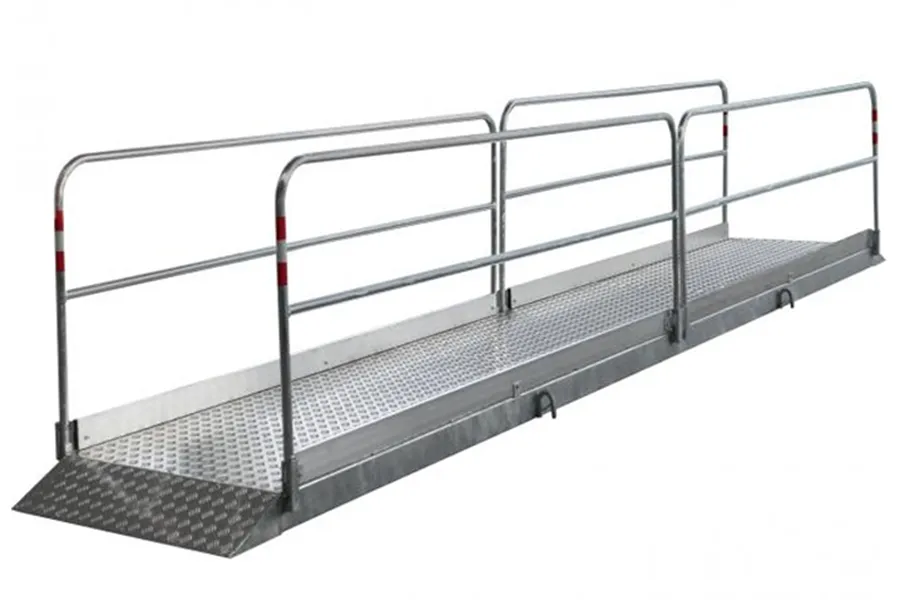
Every trench cover in the range is rated over a stated trench width, from 27.6 in up to 47 in, and the same board carries less over a wider opening. Measure the open trench at its widest point, allow for edges that break away as the work goes on, and match that measurement to the rated span on the product page. Wider openings on pedestrian routes take a railed trench bridge or an aluminum trench bridge. Longer spans are covered by the temporary bridges range, and wider vehicle crossings take steel plates.
Cable and hose size
Match the channel to the largest outside diameter on the run, with room to spare so the lid closes without pinching the line, and choose the channel count by the number of separate lines. Pumped water and sewage lines are matched by their fittings: the pipe road ramp connects at 4, 6 or 8 in, in Bauer, flange, Storz and Cardan types.
Bolt-down or loose lay
Bolt-down holes on the cable ramps and plastic boards hold a semi-permanent run in place where traffic turns or brakes on it, or where the crossing stays down for weeks. Loose lay suits short jobs and surfaces that should not be drilled, such as finished driveways and new asphalt, and covers with flexible edges grip most surfaces and stay put without fixings.
Handling and linking
The plastic boards and the lighter composite covers are one-person lifts, which suits small crews moving from cut to cut. Composite plate runs are finished with end sections, so order a pair of ends for every separate crossing.
Popular Categories

Ground Mats
View Products >
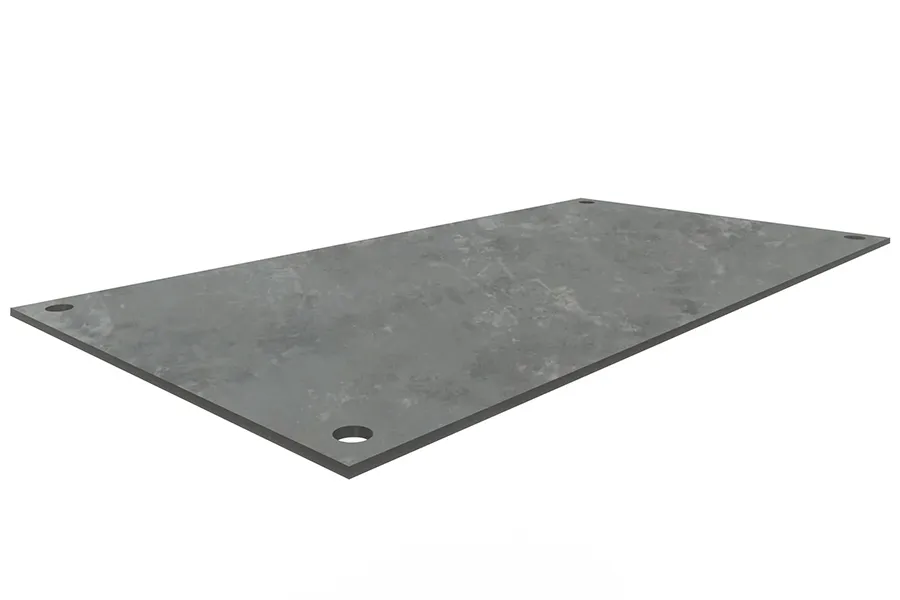
Steel Road Plates & Trench Covers
View Products >

Timber Mats
View Products >
Frequently Asked Questions
A trench cover is a temporary board or plate laid over an open excavation so that people and vehicles can cross while the work below continues. Trench covers are made in composite, plastic and steel, and each is rated for a type of traffic over a stated trench width.
On most jobsites, trench plate means a heavy steel plate set over a road excavation by an excavator or loader, and the term is used interchangeably with road plate and steel plate. Trench cover is the broader term and also takes in the lighter composite and plastic boards that crews lay by hand over sidewalk, driveway and road cuts.
A cable protector ramp is a low, ramped housing with one or more channels that cables or hoses lie in, so vehicles and pedestrians can cross a line without damaging it or tripping on it. The sloped sides let wheels roll on and off, and the body takes the wheel load in place of the cable beneath.
They do when the ramp is rated for the traffic that crosses it and the channels are sized for the lines inside. A correctly chosen ramp protects the cable from wheel loads and turns a loose cord into a visible, sloped crossing, which deals with the kind of trip hazard OSHA requires employers to control on walking and working surfaces.
For temporary runs, keep cables off traffic routes wherever possible and use cable protector ramps only where people or vehicles have to cross. Run lines along fence lines, walls and the edge of the work area, lift them overhead where clearance allows, and bury or duct them when the installation will stay for months. Rubber and PVC ramps tolerate rain, sun and mud, so they can stay outdoors for the length of the job.
Yes. Cable guard ramps have male and female ends that lock into the next section, and most site ramps connect end to end to build a crossing as wide as the lane or walkway. Join sections of the same model so the channels line up and the cables run straight through the whole crossing.