















Tree Protection Fencing
Tree protection fencing closes off the root zone of existing trees on construction and development sites, so heavy equipment, stored materials and foot traffic stay off the ground those trees depend on. It goes up where site plans and municipal tree ordinances require retained trees to be fenced before work begins. HERMEQ supplies three systems. The scaffold tube system is the heaviest duty frame, with braced steel tubes carrying anti-climb mesh panels. The timber post system sets wooden posts in the ground and clips mesh panels to them at a lower cost. The mesh and stabilizer system is the lightest of the three and the quickest to install.


Tree protection fencing systems for construction sites
The three systems differ in what holds the mesh upright: a braced steel tube frame, timber posts set in the ground, or stabilizers pinned to the surface.
Scaffold tube tree protection fencing
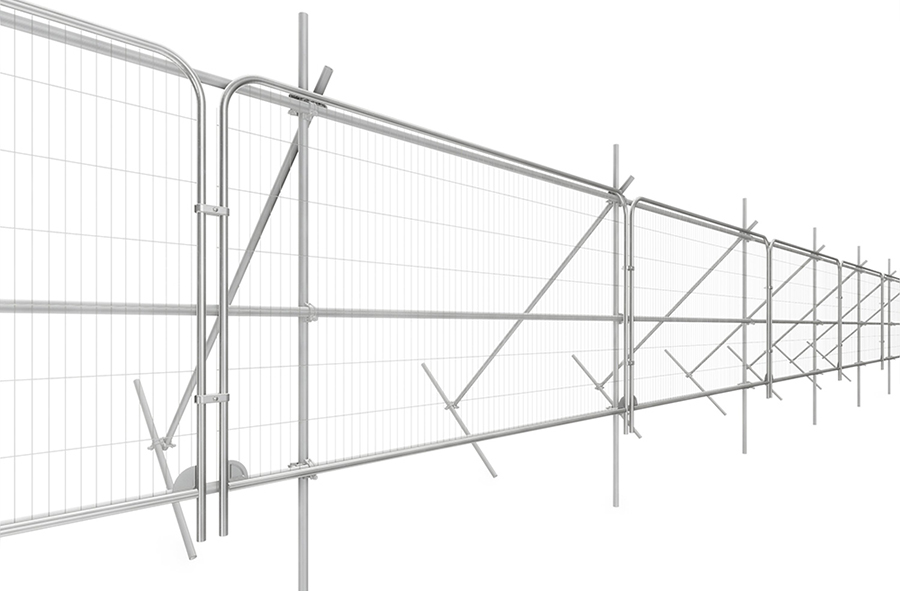
Where excavators, trucks and material deliveries work close to the zone, the heaviest frame in the range is the right one. Scaffold tube tree protection fencing uses vertical, horizontal and braced tubes with anti-climb mesh panels fixed into the frame, so the fence stands up to knocks from machinery and materials that would shift a lighter line. It suits long programs and sites where the municipal approval sets tight conditions on how retained trees are fenced.
Timber post tree protection fencing
Square wooden posts set in concrete carry the mesh in timber post tree protection fencing, and the result is a fixed line at a lower cost than the scaffold frame. The panels clipped to the posts are the same anti-climb panels HERMEQ supplies as temporary mesh fence panels. This system belongs on firm ground that can be dug, for a fence that stays in one place from the start of the job to the end.
Mesh panel and stabilizer tree protection fencing
Lightweight anti-climb panels standing on stabilizers with rubber feet make up mesh and stabilizer tree protection fencing, and ground pins hold the stabilizers down on grass and other soft surfaces. Nothing is dug or concreted, so a crew can fence a zone quickly and take it down just as fast. It suits smaller sites, shorter jobs and landscaped areas where the fence has to be in place at short notice before work starts.

Freestanding tree fence panels or a fixed frame
The answer depends on how long the fence stands, how much heavy equipment works beside it and whether the approved plan expects it to stay put. Freestanding mesh panels sit on the surface with no posts to set, so they go up and come down faster than either fixed system and can be moved when access routes and work areas change between phases. On short programs with light equipment, and on sites built in stages where the protected area shifts, that flexibility is what the job calls for.
A fixed frame of scaffold tube or timber posts holds its line when excavators, loaders and trucks work alongside the zone for months, and a crew looking for a shortcut or extra laydown space cannot simply lift it aside. That is the right choice where the tree protection plan requires the fence to stay in place from before clearing until final grading, and where moving it needs sign-off from the municipal arborist. Where only one side of a zone faces heavy traffic, the two approaches can be used together, with a fixed frame on the working side and freestanding panels along the quieter sides.
Measuring and installing a tree protection fence
With the system settled, the order comes down to measuring the run from the plan, matching the fence to the ground and planning access before anything is delivered.
Measuring the run
All three systems are priced by length: the run goes into the calculator on the product page, with the post height added for the timber system, and the calculator returns the price with a breakdown of the components. Take that length along the protection zone line shown on the approved tree protection plan, not around the trunk or the canopy you see on site, since a run measured close to the tree comes up short. Where several trees share one zone, a single run around the group is shorter than separate enclosures, and where the zone sits against the site boundary, the perimeter run of temporary construction fencing can close that side if the plan allows it.
Ground and surface
Grass, topsoil and other soft ground take ground pins, which is where the mesh and stabilizer system belongs. Firm ground that can be dug and concreted suits timber posts, while the scaffold tube frame stands above ground and goes up without post holes. Whichever system you choose, keep any digging on or outside the zone line, because post holes and concrete inside it cut and contaminate the roots the fence is there to protect.
Access through the fence line
Plan gate openings before ordering, so that arborists, inspectors and crews watering or mulching inside the zone go through a gate instead of lifting panels out. Place gates away from the routes equipment uses, so an open gate does not become a way in for machinery. Pedestrian and vehicle gates are in the temporary fence gates range. Spare clips and fittings for repairs along the run are in temporary fencing accessories.


Tree guards, mats and root barriers for new plantings
Fencing protects existing trees while construction is underway, whereas the products below protect new plantings once the work is done, protect street trees permanently in paved areas, or control roots below ground, so the stage of the job decides which one to order.
Tree guards
Saplings on forestry, conservation and landscaping schemes are protected from deer, rabbits and livestock by biodegradable tree guards. They are made from a plant-based material and can be reused or left to break down, which suits large plantings where nobody returns to collect shelters. They are designed to be used with a hardwood stake and a tree mat.
Tree mats
Laid at the base of a newly planted tree, tree mats block the light weeds need and hold moisture in the soil around young roots. They are compostable and break down in the ground, so they suit low-maintenance planting, reforestation and woodland restoration.
Root barrier
A root barrier is a membrane buried in the soil, laid vertically or horizontally, to control roots and invasive species such as Japanese knotweed. It is used near buildings, roads and utility lines, and in public spaces where soil has to be contained.
Tree grills
Set flush in sidewalks and plazas around the base of a street tree, steel tree grills let pedestrians walk over the root area without a trip hazard while water still reaches the soil. They are galvanized and powder-coated for permanent installation in busy pedestrian areas, commercial plazas and civic squares.
Metal tree guards
Standing around the trunk of a street tree, metal tree guards protect it from contact with pedestrians and vehicles. They are galvanized steel, used alone or paired with a tree grill on municipal sidewalks, retail parks and streetscapes.
Popular Categories

Temporary Fence Panels
View Products >

Construction Site Gates
View Products >

Acoustic Barriers
View Products >
Frequently Asked Questions
Tree protection fencing is a temporary barrier put up around retained trees before construction starts, to keep equipment, vehicles, stored materials and spoil out of the root zone. Compacted soil and cut roots harm a tree as surely as a strike on the trunk, so the fence encloses the root zone, not only the trunk. It is usually set out along the protection zone line drawn on the site's tree protection plan.
The distance is set by the local tree ordinance or by the arborist who prepares the tree protection plan, not by the fence supplier. Many municipal codes base it on the dripline of the canopy or on a multiple of the trunk diameter, and some set a minimum for each tree size. Where the code and the approved plan differ, the approved plan is the one the inspector checks against.
No. A tree barrier fence stands above ground around a retained tree and keeps equipment off its roots while construction is underway. A root barrier is buried in the soil to control where roots grow, so that they stay clear of foundations, roads and utilities. They solve different problems, and some sites need both.
Yes. A sign marking the area as a tree protection zone tells a new operator or delivery driver why the fence is there and that the ground inside is off limits. Fix signs along the run and at any gate, facing the work area, and where the approved tree protection plan specifies wording or spacing, follow it.
Yes. The panels in each system are anti-climb mesh fence panels, so once the trees no longer need protecting they can go on to fence a perimeter, a laydown area or the next phase of the job. Used as a freestanding line, they need the stabilizers and clips that suit temporary panel fencing.
Orange plastic fence is a lightweight barrier staked around a zone, and it marks the boundary clearly and goes up quickly. Rigid mesh panel fencing holds a fixed line, resists being pushed aside by equipment or stacked materials, and keeps its shape over a long program. Where the plan calls for a rigid barrier or heavy equipment works close to the zone, mesh panels are the better fit, while plastic fencing does the job of marking a boundary in light-use areas.